
Extended Aeration vs. Fixed Film Systems: What Actually Performs in the Field?


When evaluating wastewater treatment technologies, engineers and owners often compare extended aeration systems and fixed film and MBBR systems and textile media technologies. Both can produce quality effluent, but treatment performance is only one piece of the equation.
The real question is: Which system delivers reliable performance, manageable maintenance, and long-term value in the field?
Understanding the Difference Between Extended Aeration vs. Fixed Film Systems
Extended aeration systems use suspended microorganisms to biologically treat wastewater. The process has been widely used for decades because it is simple, reliable, and capable of handling changing flows and loading conditions.
Fixed film systems rely on bacteria attached to media surfaces. By increasing the amount of biological growth within the system, they can achieve high treatment efficiency in a compact footprint. However, their performance often depends on the condition of the media and proper maintenance.
Performance Is More Than Effluent Numbers
When comparing Extended Aeration vs. Fixed Film Systems, treatment numbers often dominate the conversation. While both technologies can achieve strong effluent quality, long-term success depends on how the system performs under real-world conditions.
Wastewater systems routinely experience:
Flow fluctuations
Organic loading spikes
Seasonal occupancy changes
Weather-related impacts
Extended aeration systems have historically performed well under these variable conditions because the process is inherently flexible and forgiving. While fixed film systems can also perform well, some designs may be more sensitive to media fouling, maintenance practices, or changing loading conditions. The result is that many engineers prioritize reliability and operational flexibility alongside treatment performance when evaluating technologies.
Looking Beyond Today's Permit
Meeting permit limits is important, but long-term system performance often depends on achieving treatment levels that protect downstream infrastructure.
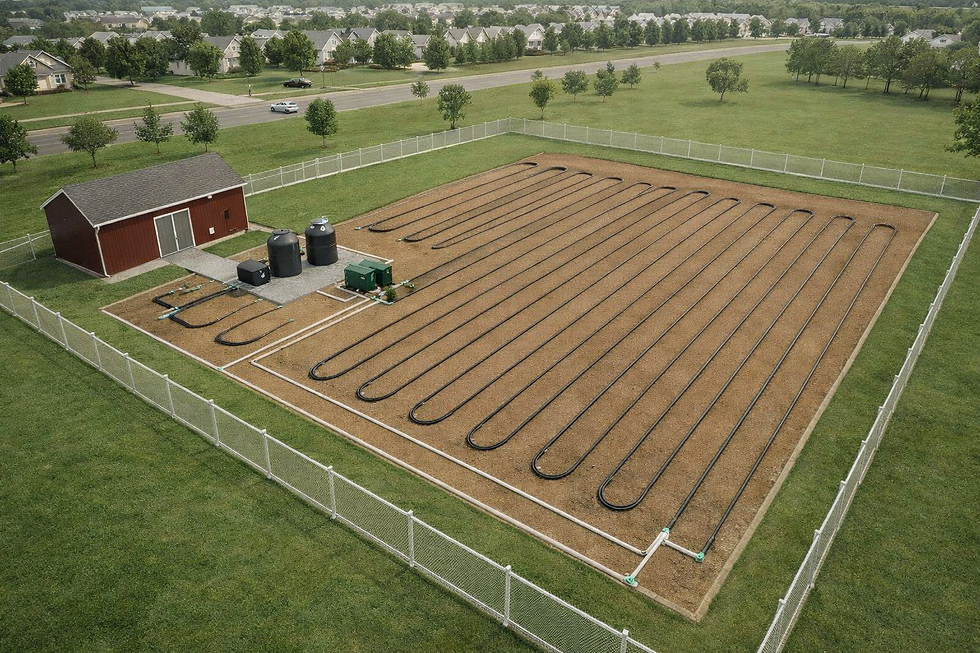
For example, lower BOD and TSS concentrations can help reduce biomat development, soil plugging, and maintenance requirements in drip dispersal systems. Better pretreatment can also help maintain infiltration rates and extend the useful life of downstream components. This is one reason many owners are shifting their focus from simply meeting permit requirements to evaluating the overall lifecycle performance of a treatment system.
Why Many Owners Still Choose Extended Aeration
The wastewater industry is full of technologies that promise exceptional treatment performance. However, owners are often more concerned with what happens after installation than what happens during a sales presentation.
Extended aeration remains one of the most widely used treatment processes because it offers several practical advantages:
Proven performance across decades of operation
Ability to handle fluctuating flows and organic loading
Familiar equipment and operational practices
Readily available replacement parts
Lower dependence on proprietary media or components
Easier troubleshooting and maintenance
For many municipalities, developers, and utility operators, simplicity can be just as important as treatment efficiency.
Maintenance requirements can also influence technology selection. Traditional fixed film systems utilize media with a very high surface-to-mass ratio, which provides significant area for biological growth but can make the media difficult to clean if fouling occurs. Some newer moving-bed biofilm reactor (MBBR) systems address this challenge by using self-cleaning media that remains in motion throughout the treatment process. However, achieving this benefit typically requires additional automation, controls, and mechanical equipment, which can increase operational complexity and long-term operating costs. Depending on the design, fixed-film and MBBR systems may also require a larger treatment footprint than some extended-aeration configurations.
The Bottom Line
The debate surrounding Extended Aeration vs. Fixed Film Systems doesn't have a universal answer. Both technologies can be successful when properly designed, installed, and operated.
However, extended aeration remains a preferred treatment solution because it balances strong performance with operational simplicity, proven reliability, and long-term flexibility. For owners focused on lifecycle costs, lower upfront investment, ease of maintenance, and dependable operation, these advantages often make extended aeration the practical choice over newer or more complex technologies, such as fixed-film systems.
Contact Us
Every wastewater treatment project comes with unique treatment goals, site constraints, and operational requirements. With 45 years of experience in the wastewater industry, Gainey's provides precast concrete extended aeration wastewater treatment solutions designed for long-term performance, reliability, and ease of operation. As a partner you can rely on, we're here to help evaluate your project and find the right solution for your needs. Contact us to learn more.


Comments