
5 Keys to Designing Wastewater Systems That Last 100 Years


When designing wastewater systems, the focus is often placed on upfront cost and meeting minimum permit requirements. But the real question should be: how will the system perform 20, 50, or even 100 years from now? Wastewater infrastructure is one of the most important systems a community depends on. When it fails, the consequences can include environmental violations, expensive repairs, operational headaches, and public health concerns. That’s why designing wastewater systems for long-term durability and lifecycle performance should be part of the conversation from day one. Here are five key factors that help create wastewater systems built to last 100 years.
1 | Designing Wastewater Systems with Durable Materials
The foundation of a long-lasting wastewater system starts with the structure itself.
One of the biggest advantages of precast concrete wastewater systems is durability. Precast concrete tanks designed to 5,000 PSI can achieve a service life of 50–100 years in the pH-neutral environment of the extended aeration treatment process. Unlike steel systems that can deteriorate over time due to corrosion, precast concrete provides a resilient structure capable of handling real-world environmental conditions for generations. This becomes especially important in regions exposed to moisture, flooding, and harsh environmental conditions.
Typical service life expectations for major components include:
Precast Tanks: 50–100 years
Galvanized Steel Gratings: 40–50 years
PD Blower Package: 20 years
Galvanized Piping: 40–50 years
PVC Piping: 15 years
Brass Ball Valves: 30–50 years
When designing wastewater systems, selecting durable materials upfront helps reduce long-term replacement costs and operational disruptions.
2 | Prioritize High-Quality Treatment Performance
Long-term wastewater system performance depends heavily on effluent quality.
Traditional wastewater treatment processes are commonly designed to achieve around 20 BOD / 20 TSS, often requiring oversized clarifiers to reach those levels consistently. However, advancements in extended aeration technology now allow systems to achieve significantly lower treatment limits.
Modern extended aeration wastewater systems can achieve:
10 mg/L BOD₅ / 15 mg/L TSS
As low as 5 mg/L BOD₅ / 5 mg/L TSS with tertiary filtration
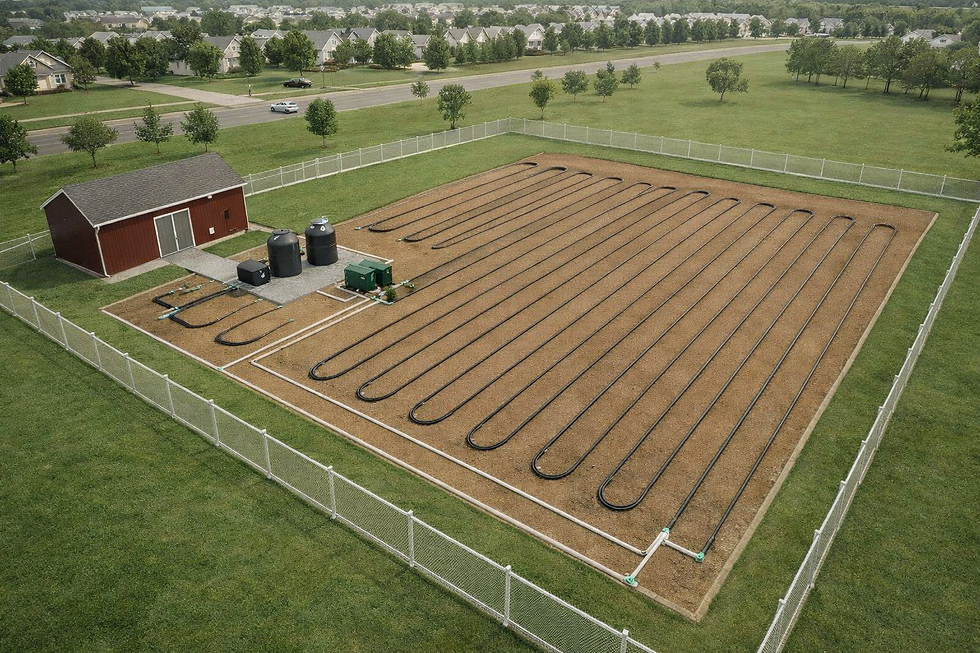
Lower effluent levels help reduce downstream issues such as drip field clogging, excessive biomat development, and environmental compliance concerns.
Designing wastewater systems with stronger treatment performance upfront can dramatically improve long-term infrastructure reliability.
3 | Keep Wastewater System Maintenance Simple
Overly complicated systems can create expensive maintenance challenges over time, especially when they rely on proprietary media, specialized equipment, or difficult-to-source components. Extended aeration systems are often preferred because they utilize a familiar biological treatment process and can be designed using widely available, off-the-shelf components.
Simpler maintenance can lead to:
Reduced downtime
Lower operator training demands
Easier part replacement
Lower long-term operational costs
When designing wastewater systems for decades of operation, maintainability is just as important as treatment performance.
4 | Evaluate Lifecycle Cost, Not Just Initial Cost
A lower upfront price does not always mean a lower overall cost. Long-term operational savings, maintenance reduction, energy efficiency, and system lifespan should all be considered during the design process. Systems with durable structures, simple maintenance requirements, and lower energy demand often provide significantly better lifecycle value over time.
Extended aeration systems are frequently chosen because they offer:
Relatively low energy consumption
Sustainable, long-lasting components
Expandability for future growth
Lower maintenance complexity
When designing wastewater systems, lifecycle cost should be viewed as a long-term infrastructure investment, not just a construction expense.
5 | Design for Future Growth
Communities grow, regulations evolve, and treatment needs change over time. Wastewater systems should be designed with scalability and flexibility in mind. Precast concrete treatment systems can often be installed in phases, making them ideal for developments planning for future expansion.
This phased approach allows communities and developers to:
Reduce initial capital strain
Expand treatment capacity over time
Adapt to changing regulations and flows
Minimize disruption during future upgrades
Designing wastewater systems with future growth in mind helps communities avoid costly redesigns later.
Contact Us
Gainey’s offers advanced packaged extended aeration wastewater treatment plants designed for long-term performance, durability, and scalability. Our precast concrete systems serve developments ranging from 5 homes to 1,000,000 GPD and are manufactured in Louisiana for projects across the southeastern United States.
If you have an upcoming wastewater project, our team would be happy to discuss design considerations, treatment goals, and long-term planning solutions.


Comments