
6 Steps on How to Convert Cast-in-Place to Precast

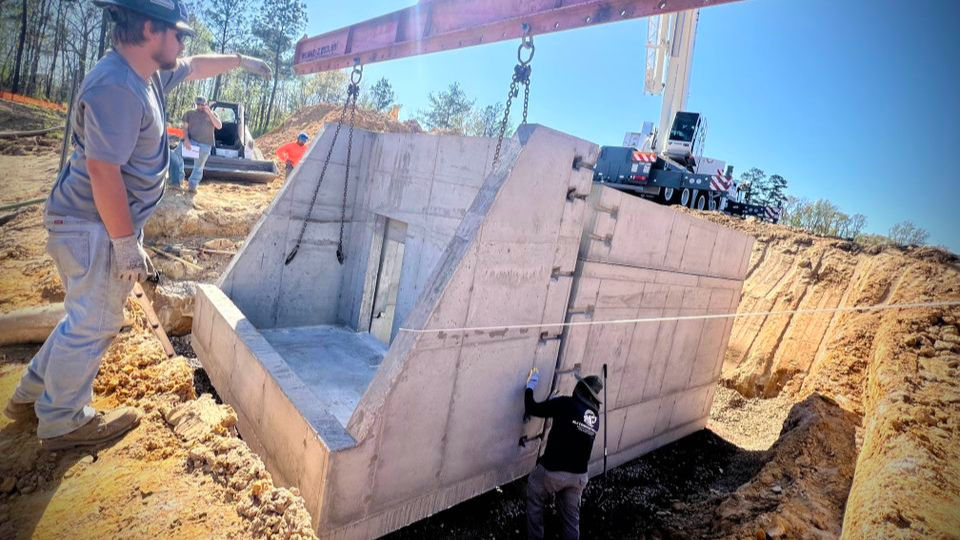
Many infrastructure projects begin as cast-in-place concrete because it's the traditional approach. However, as schedules tighten, labor becomes more difficult to secure, and owners demand higher quality, more engineers are looking for ways to convert cast-in-place to precast.
Making the transition doesn't mean redesigning your project from scratch. In many cases, the structural intent remains the same. The construction method simply changes to improve efficiency, quality, and installation speed. Here's how the process works.
Step 1: Identify Opportunities to Convert Cast-in-Place to Precast
The first step is determining whether the structure is a good candidate for precast manufacturing. Many cast-in-place structures can be successfully converted without changing their intended function.
Common candidates include:
Pump stations
Wet wells
Valve vaults
Junction boxes
Box culverts
Utility structures
Pipe casings
Equipment foundations
Industrial containment structures
Custom drainage structures
Secondary containment
Fire water storage
Electric vaults
Wastewater treatment
Trenches
Control buildings
Holding tanks
Pile caps
The earlier you evaluate precast during the design process, the more opportunities you'll have to improve constructability, streamline installation, and reduce overall project costs. We recommend consulting with a precast concrete manufacturer early in the design phase to explore your options and identify the best solution for your project.
Step 2: Evaluate Transportation and Lifting Requirements
Unlike cast-in-place construction, precast structures are manufactured offsite and transported to the jobsite.
During the design phase, engineers and precast manufacturers work together to determine:
Maximum shipping dimensions
Transportation routes
Piece weights
Crane capacities
Lifting locations
Site access limitations
If a structure is too large to transport as one piece, it can often be divided into multiple sections that are assembled onsite. Rather than limiting the design, transportation considerations frequently lead to innovative engineering solutions that simplify construction.
Step 3: Redesign the Structure for Modular Construction
When you convert cast-in-place to precast, the design must be optimized for manufacturing, shipping, and installation.
Engineers evaluate several key factors, including:
Joint locations
Structural load paths
Connection details
Reinforcement continuity
Waterproofing systems
Installation sequence
Handling steel for lifting and installation
The goal is to create components that are easy to manufacture while maintaining the structural performance of the original design.
Step 4: Integrate Embedded Components
One major advantage of precast is that many field installation tasks can be completed before the product ever arrives on-site. Pipe penetrations, conduit openings, embedded plates, ladders, anchors, and other accessories can all be cast directly into the structure. Some products can even be delivered fully assembled with internal piping or mechanical components already installed, dramatically reducing field labor.
Step 5: Optimize Concrete Quality
Manufacturing concrete in a controlled environment offers significant quality advantages over field placement.
Precast facilities closely monitor:
Concrete mix designs
Water-to-cement ratios
Reinforcement placement
Concrete strength
Curing conditions
Quality control inspections
This controlled manufacturing process produces consistent, durable concrete with lower permeability and improved long-term performance compared to many field-poured applications. Engineers also have the flexibility to specify the concrete mix design, admixtures, protective coatings, and required stripping and design strengths to meet the performance needs of their project.
Even well-designed concrete mixes supplied by a ready-mix producer can be compromised during transport or placement. Water added on-site to improve workability can reduce concrete strength and long-term durability, while slump changes during delivery may negatively affect proper consolidation.
Bonus: Many precast manufacturers hold quality certifications through their industry trade associations and undergo annual third-party audits to verify compliance with rigorous quality standards.
Step 6: Plan for Fast Installation
Installation planning begins well before the structure reaches the project site.
The construction team develops a plan for:
Delivery scheduling
Crane operations
Piece sequencing
Joint connections
Backfilling
Site restoration
Since manufacturing is already complete, installation can often be completed in days rather than weeks, minimizing road closures, facility shutdowns, and project disruptions.
Collaborate Early with Your Precast Manufacturer
The most successful projects begin with collaboration during the design phase. When engineers involve a precast manufacturer early in the process, they can often optimize the design by reducing unnecessary concrete volume, simplifying reinforcement layouts, improving constructability, minimizing installation time and labor requirements, and enhancing long-term durability. Early collaboration helps ensure the final design is optimized for both performance and efficient construction, resulting in a smoother project from design through installation.
Common Misconceptions
"The structure is too large."
Many large structures can be divided into transportable sections and assembled onsite. Size is rarely the obstacle many people assume it is.
"Custom designs can't be precast."
Modern precast manufacturers routinely produce highly customized structures for industrial, utility, and infrastructure applications.
"Cast-in-place is always less expensive."
When labor shortages, weather delays, equipment rentals, and construction schedules are factored in, precast often offers a lower total installed cost. Precast concrete’s assured quality helps achieve the structure’s intended service life.
Ready to Explore a Precast Solution?
If you're considering whether to convert cast-in-place to precast, Gainey's partners with engineers, contractors, and owners to evaluate existing designs and develop practical precast alternatives that improve constructability, quality, and project efficiency. What sets us apart is our passion for custom precast solutions and our collaborative design consultation process. We take your vision to completion by working alongside you to bring innovative ideas to life while meeting your project's unique requirements. Innovation is one of our core values, and we enjoy helping customers solve complex design challenges. Schedule a design consultation today or contact us to learn how precast can benefit your next project.


Comments